Ready for Anything: A Homeowner's Preparedness ChecklistSeptember is National Preparedness Month, and this year's theme from FEMA's Ready campaign is Americans Stand Ready — the idea that

Dated: August 14 2026
Views: 78
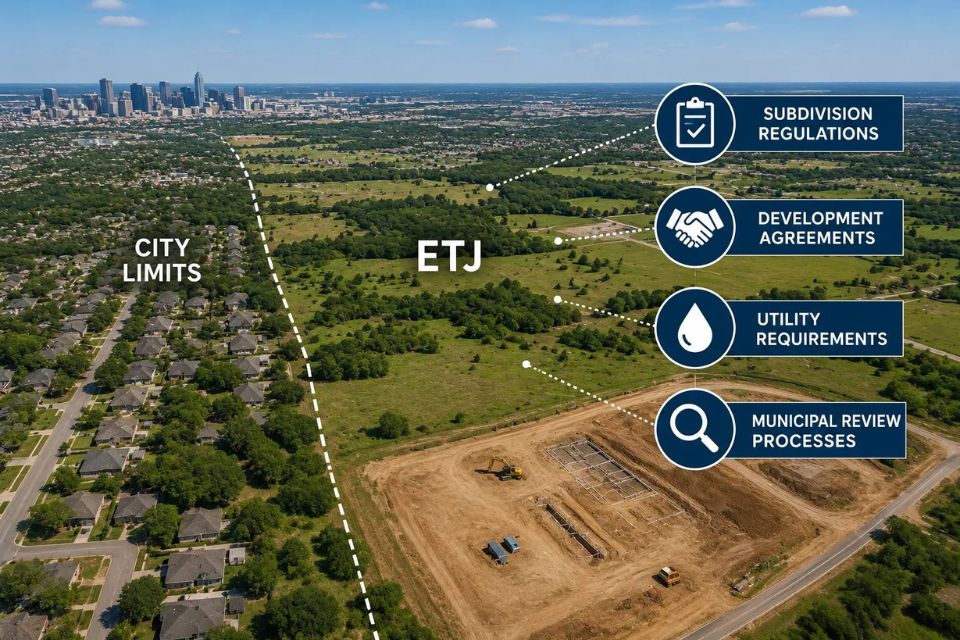 ETJ Texas Explained
If you're buying land, developing property, or investing in commercial real estate in Texas, you've probably heard the term ETJ.
For many landowners, ETJ status can significantly impact development timelines, subdivision approvals, utility planning, and future property value. Yet surprisingly few buyers fully understand what an ETJ is—or how it affects their land.
Before purchasing property in Central Texas, it's important to understand how ETJ regulations work and what they could mean for your development plans.
ETJ stands for Extraterritorial Jurisdiction.
In Texas, an ETJ is an unincorporated area located outside a city's official boundaries where that city maintains certain regulatory authority over development and land use. The Texas Legislature created ETJs to help municipalities plan for future growth and coordinate development around city limits.
While a property located in an ETJ is not technically inside the city, it may still be subject to certain city regulations and development requirements.
This often surprises landowners who assume that being outside city limits means complete freedom from municipal oversight.
The size of a city's ETJ depends on its population.
Under Texas law, ETJs can extend from one-half mile to as much as five miles beyond city boundaries, depending on the size of the municipality. Larger cities generally have larger ETJs.
In rapidly growing regions such as Austin, Georgetown, Round Rock, Leander, Liberty Hill, Bastrop, and other Central Texas communities, ETJ boundaries can cover significant areas of developable land.
As Texas cities continue expanding, many properties that once felt rural are now located within municipal ETJs.
One of the biggest misconceptions about ETJs is that cities have the same authority there as they do inside city limits.
That's not the case.
Municipal authority within an ETJ is more limited than inside the city itself. However, cities often retain significant control over certain aspects of development, particularly subdivision and platting regulations. Texas law grants municipalities authority over subdivision approvals in their ETJs, often working alongside county governments.
Depending on the location and circumstances, a property owner may encounter requirements related to:
The exact level of oversight varies by municipality and project type.
Generally, no.
Most Texas cities cannot simply apply their zoning ordinances outside city limits. Likewise, courts have held that municipalities generally lack authority to enforce building codes beyond their corporate boundaries without specific legislative authorization.
However, this does not mean development is unrestricted.
Subdivision regulations, development agreements, utility requirements, and other municipal review processes can still influence how land is developed within an ETJ.
For developers, understanding these distinctions is critical when evaluating land opportunities
For investors, ETJ status can be both an opportunity and a challenge.
On one hand, ETJ properties are often located directly in the path of future growth. As cities expand, land within the ETJ may benefit from increased demand, infrastructure improvements, and future development potential.
On the other hand, ETJ properties can involve additional entitlement considerations that affect project timelines and development costs.
Before acquiring land, investors should understand:
Failing to evaluate these factors early can create unexpected delays later in the development process.
Texas lawmakers have recently enacted legislation that gives some property owners additional options regarding ETJ status.
Recent changes allow certain landowners to petition for removal from a city's ETJ under specific circumstances, reflecting ongoing debates about local control, property rights, and municipal growth management.
Because ETJ laws continue to evolve, investors and developers should stay informed about current regulations before making acquisition decisions.
n today's Texas growth markets, understanding ETJ boundaries can be just as important as understanding zoning, utilities, floodplain conditions, or roadway access.
Whether you're purchasing commercial land in Williamson County, Bastrop County, Hays County, Travis County, or elsewhere in Central Texas, ETJ status can have a meaningful impact on development strategy and project timelines.
The most successful land investors don't discover ETJ issues after closing—they identify them during due diligence.
An ETJ in Texas is not simply a line on a map.
It represents an area where municipal planning, future growth, and development regulations often intersect. For landowners, developers, and investors, understanding ETJ requirements can help avoid costly surprises and create a clearer path toward successful development.
As Central Texas continues to experience rapid growth, evaluating ETJ status should be a key part of any land acquisition or development strategy. Knowing which municipality has jurisdiction, what regulations may apply, and how future growth plans could impact a property can make a significant difference in both project timelines and long-term investment value.
Writing Contributor Josh Hubka, CCIM ETJ Texas: What Landowners & Developers Need to Know

Frank Roberts is a uniquely trained Broker Associate who specializes in the listing and sales of land in East Texas near the Dallas-Ft. Worth area. Located only 30 miles east of Dallas, he consistentl....
Ready for Anything: A Homeowner's Preparedness ChecklistSeptember is National Preparedness Month, and this year's theme from FEMA's Ready campaign is Americans Stand Ready — the idea that
How to Host Game Day Without Missing the GameFootball is back, which means the next few months of weekends just got claimed — and the season is long enough that hosting duty lands on you at
Finding a home should be about more than four walls. It should be about finding the place where your life fits.There are thousands of homes for sale.But finding your home?That's different.Because
ETJ Texas ExplainedIf you're buying land, developing property, or investing in commercial real estate in Texas, you've probably heard the term ETJ.For many landowners, ETJ status can
 © 2026 North Texas Real Estate Information Systems, Inc. All rights reserved. Disclaimer: All information deemed reliable but not guaranteed and should be independently verified. All properties are subject to prior sale, change or withdrawal. Neither listing broker(s) nor REMAX Four Corners shall be responsible for any typographical errors, misinformation, misprints and shall be held totally harmless. The database information herein is provided from and copyrighted by the North Texas Real Estate
Information Systems, Inc. NTREIS data may not be reproduced or redistributed and is only for people viewing this site. All information provided is deemed reliable but is not guaranteed and should be independently verified. The advertisements herein are merely indications to bid and are not offers to sell which may be accepted. All properties are subject to prior sale or withdrawal. All rights are reserved by copyright.
Data last updated: September 12, 2026 3:16 AM UTC
Show More...
© 2026 North Texas Real Estate Information Systems, Inc. All rights reserved. Disclaimer: All information deemed reliable but not guaranteed and should be independently verified. All properties are subject to prior sale, change or withdrawal. Neither listing broker(s) nor REMAX Four Corners shall be responsible for any typographical errors, misinformation, misprints and shall be held totally harmless. The database information herein is provided from and copyrighted by the North Texas Real Estate
Information Systems, Inc. NTREIS data may not be reproduced or redistributed and is only for people viewing this site. All information provided is deemed reliable but is not guaranteed and should be independently verified. The advertisements herein are merely indications to bid and are not offers to sell which may be accepted. All properties are subject to prior sale or withdrawal. All rights are reserved by copyright.
Data last updated: September 12, 2026 3:16 AM UTC
Show More...
